Don't Cluck Around! OOTB Training Guide by Doc Lane's Pharmacy
Generally, this column focuses on various topics to do To enhance your horse’s training as it moves from being a racehorse to a riding horse, there are often aspects worthy of discussion that belong in the "avoid doing" category. Overusing clucking—or indeed any method meant to encourage forward movement like using the legs or a whip—is certainly one such aspect.
All of our activities involving horses — from how we manage them to how we ride, as well as all interactions at any moment — constitute training. This holds true regardless of whether we approach these actions with specific intentions or desired outcomes.
Currently, a strategically timed clucking sound—or perhaps a kissing noise—synchronized with other suitable cues can be beneficial when prompting a horse to move forward or boost its pace. However, incessant, thoughtless clucking, regardless of whether you're on the ground or mounted, proves counterproductive rather than helpful. This approach may lead the horse to ignore these signals altogether. Consequently, this could diminish responsiveness from an initially reactive animal and exacerbate sluggishness in horses that were previously lethargic.
Back to the Basics
Horses acquire knowledge through connecting signals (like sounds, movements, or physical contacts) with specific behaviors. For instance, making a clucking or smooching noise typically motivates a horse to move forward. If this vocalization alone doesn’t elicit the preferred action, additional prompts become necessary. These reinforcements may involve using visual cues via your posture, generating movement or energy from your lower half, or applying gentle pressure with parts of your body like your legs or a tool such as a crop when riding. On the ground, these aids could also be a lunge whip or carrot stick, along with ensuring there’s no looseness in your lead rope or lungeline.
If you're guiding younger horses who are still getting used to being handled, you could make a clicking sound ("cluck") to prompt them to walk beside you instead of trailing behind. Should this sound not suffice, consider synchronizing the click with a gentle touch from a dressage whip or using the loose end of the lead rope held in your left hand to gently nudge their side or rear, encouraging them to move ahead.
While teaching them to lunge, this exercise presents a variation of the familiar technique. You can use the "cluck" command to encourage them to move forward. If they fail to react appropriately, step closer and wave or throw the loose end of the lunging rein, or utilize a lunging whip to instill movement from behind, timing these actions with your verbal cue ("cluck"/"smooch"). Should they remain hesitant, increase the intensity by aiming the loose reins towards their rearquarters or gently tapping them with the lunging whip for added impetus.
The aim is to instruct them using straightforward, evident signals—providing as much or as little guidance as each horse requires to grasp the intended command—and subsequently refine these cues progressively. This approach allows for increasingly subtle requests while still eliciting an equivalent reaction from the horses.
Issues occur when the rider keeps using the clucking/smooching noise without achieving the expected outcome, yet doesn’t increase volume (along with employing additional cues previously discussed) to emphasize that the requested forward movement isn't negotiable. If you persistently make these sounds at your horse without eliciting an adequate reaction, you're weakening their significance to the animal and teaching them to disregard such signals altogether.
Timing is Everything
Although this subtitle could easily stand alone as an article, since it pertains to using vocal cues like a cluck or smooch, synchronizing these sounds with commands your horse already understands can significantly improve their association with the intended action. On the flip side, after a horse learns that a cluck or smooch indicates "move forward," it can reinforce additional signals effectively.
The crucial aspect here involves synchronizing the sound signal with any additional signals to ensure the horse connects these cues as related, eventually associating them with your command. Additionally, it’s vital to coordinate the reward appropriately—whether this entails a physical pat, spoken encouragement, or ceasing an applied stimulus—which helps the animal grasp that it has performed the desired action.
While instructing a young horse about the significance of a cluck or smooch, I typically do so within a round pen or during walks led from the ground. Inside the round pen, I synchronize the moment when I make a clucking noise with tossing the loose end of my lunge rein (or flicking my lunging whip slightly behind them), signaling for them to move ahead. Initially, I might amplify these signals multiple times until they start trotting several rounds inside the enclosure; after this, I request that they decelerate and commend their compliance through verbal praise and/or gentle stroking. Ultimately, once the horse correlates these sounds with specific actions, one ought to achieve the intended response solely using the auditory cue.
When mounted and guiding a slow-moving horse, if asking for a trot with gentle pressure from my heel doesn’t yield the expected reaction, I'll apply firmer pressure with my heel and use an additional verbal signal like a cluck or smooch. at the same It’s time to strengthen the command. If I don’t receive the expected reaction, I will follow up with a gentle but decisive tap from a crop or dressage whip alongside my leg aid and verbal signal, aiming to convey, "Okay, it’s clear; this isn’t just a request." If your desire is to gallop, I am telling you to trot. ”
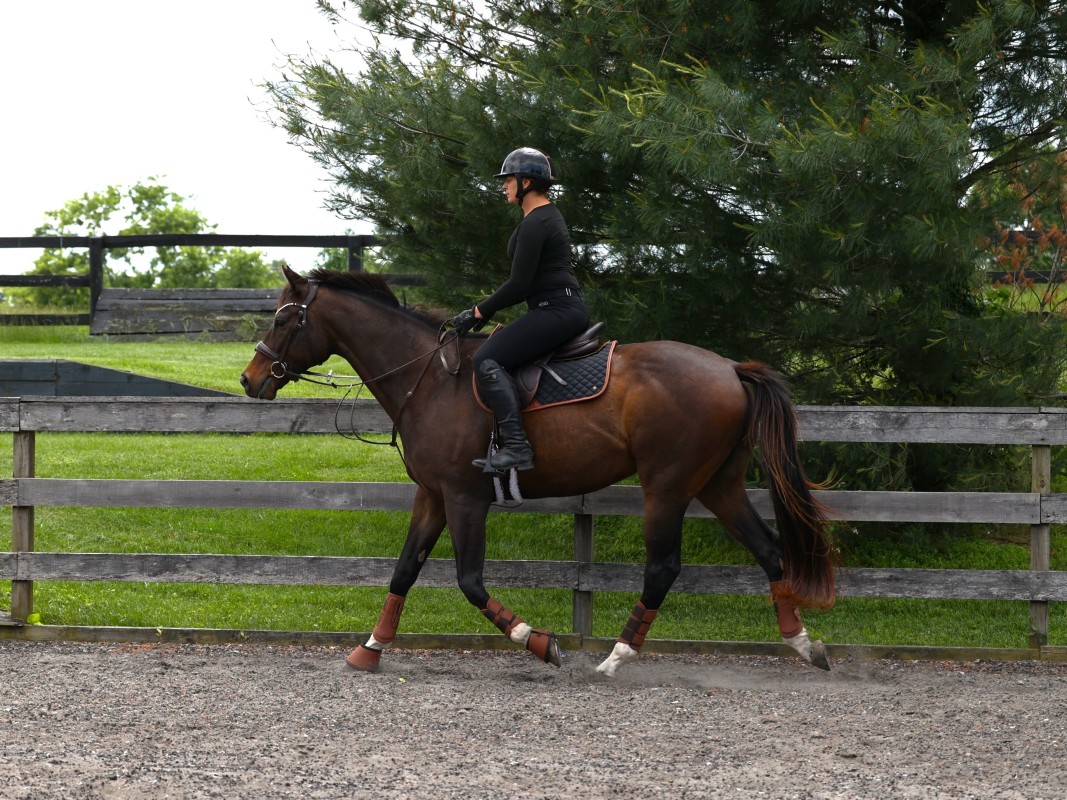
The same principle applies when dealing with a horse that falls behind the rider’s legs and struggles to keep up momentum. An ideally trained horse ought to propel itself forward—its gait should remain consistent until directed otherwise for acceleration or deceleration. When handling a lethargic mount reluctant to move promptly, ensure each command carries weight; thus, just like refining upward transitions within a rounded arena or during lunging sessions starting from stationary positions or walking speeds, assert firmly upon sustaining this tempo. Promptly address any attempt by the horse to decrease velocity using an authoritative cluck combined with kicks and occasionally supplemented by tapping lightly with a whip simultaneously—a method intended to rouse their attention and refocus energy. However, refrain from incessantly repeating commands such as repeated clucking—or utilizing additional cues—if these do not yield the expected reaction since doing so may desensitize the animal towards those signals over time.
Regardless of whether you're riding on the flat or over fences, the aim is to determine how strongly you need to use your aids to achieve the desired reaction. After practicing several times at this level of intensity, you should try to progressively request less forcefully (for example, using just the leg cues rather than a whip, and eventually not needing verbal prompts at all).
Beyond a Simple Cluck
Teaching a horse to react to a cluck falls under basic horsemanship skills, often referred to as Horse Training 101. However, advancing this skill into more complex commands represents upper-level learning—think of it as 400-level coursework. This involves getting horses to distinguish between various sounds or differing numbers of clucks. Certain trainers prefer using one cluck for trotting, two clucks for cantering, and a distinct signal for walking; conversely, some opt for one cluck to indicate walking, two for trotting, with yet another uniquely different cue used specifically for asking the horse to canter.
I am quite straightforward, so I usually employ my voice in a simpler manner — primarily as fundamental encouragement to move ahead. After they grasp this concept, I introduce them to the terms "walk," "trot," "canter," and "whoa" for clearer indications of distinct paces, utilizing varied tonal nuances for each command.
You might be amazed at what you can instruct a horse when the timing and strength of your cues are deliberate.
Troubleshooting Tips
Be consistent – Ensure you maintain consistency with the clucking sound. You wouldn't want your horse to think certain behaviors warrant a cluck some of the time but face harsher reactions at others, which could lead to confusion. Coordinate the timing of your clucks with other aids used for encouragement and avoid excessive usage; otherwise, your horse might become less responsive due to habituation.
The over-reaction – Certain horses exhibit higher sensitivity compared to their counterparts, and some respond predominantly to auditory cues rather than visual or tactile stimuli. Additionally, you cannot predict how a previous owner may have used specific aids when training the horse. Assess which signals elicit particular responses from your horse and determine where an oral "cluck" stands within this framework. This will enable you to fine-tune it for subtle prompting or strong communication as needed.
